


|
|
|---|


Wednesday, November 26, 2008
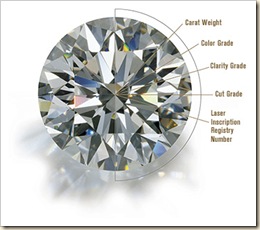
Buying colored gemstones is like going on a treasure hunt. And like in a treasure hunt the right map is the key to the treasure, in gemstone expedition the knowledge of the 4C’s is the key to getting the perfect gemstone your money can get you. Its important to juggle the 4C’s to get good value for your money.
Color is the most compelling of the 4C’s. A gemstone with a pure vivid color is considered to be the most valuable. For instance a royal blue sapphire costs more than a dark blue sapphire of same quality. A pure blue aquamarine costs more than a bluish green aquamarine. So if you like the darker or the lighter shades, or like the combination of two or more colors in any gemstone, enjoy the reduced costs on your stones.
There is so much talked about cut in the gemstone world that I feel at times cut is more important than color. Anyways, frankly as a novice buyer I do not relate to the cut much. All I know is cut affects the flow of light in colored gemstones affecting their brilliance. High brilliance gemstones cost more.
Clarity is a paradox – gemstones very rarely occur without inclusions, while buying they say look for gems without inclusions. More the inclusions, lesser the cost. So look for gemstones that do not have prominent face-up scars. And carat is the easiest. Bigger the stone, more expensive it will be considering other quality parameters.
Tuesday, November 25, 2008

Amethyst and Citrine actually belong to the same mineral family, quartz with the only difference being the color. Amethyst comes in hues of purple and citrine in hues of golden yellow.
An interesting fact – amethyst when heated in extreme temperatures changes to orangish yellow in color making it citrine. Natural citrine is actually very rare and most of the gem traded in the market is heated amethyst. This is an accepted trade practice as both crystals are actually same.
In very rare cases, amethyst and citrine occur in one crystal only, this gemstone is called amertrine. Amertrine is a shaded gemstone with hues of purple and yellow making a fine color contrast in the same gem.
Monday, November 24, 2008

The yellow color quartz used as gemstone in the jewelry industry is known as citrine. Citrine is a semi-precious gemstone which is usually found in yellow, orange or golden hues. This gleaming golden gemstone is often sold by unscrupulous dealers as more expensive orange-yellow topaz.
The name citrine is derived from the French word ‘citron’, meaning lemon. The molecular formula of citrine is SiO2 , with a hardness of 7 on Mohs scale. Citrine is fairly resistant to scratches and cracks thus making it an ideal choice for a daily wear stone. The leading producer of naturally mined citrine is Brazil, with maximum production coming from the state of Rio Grande Do Sul. The other deposits of citrine are found in Russia, Madagascar and France.
The naturally occurring citrine is pale yellow in color. While the citrine used in jewelry is darker in color. This color change occurs due to the heat, which is applied to amethyst to turn it into yellow color gem called citrine. For this color change to happen naturally, the gemstone amethyst has to be near a heat emitting source in the earth’s crust. This gemstone should be protected from sunlight as a lot of exposure to sunlight will cause a permanent darkening effect over the stone or jewelry.
Citrine is the birthstone for the month of November and anniversary gemstone for the seventeenth year of marriage. This yellow color gemstone looks pretty especially when set in white gold. The various forms of body adornments like rings, bracelets, earrings and pendants are usually in demand, but the stone’s brilliant is at its best when set in a pendant.
Thursday, November 20, 2008
 I've been making bangles, a form of bracelet that I'm quite fond of myself. I always have some sort of bangle on whether it's a smooth band of gold or one set with gemstones. The bangle is an especially versatile bracelet since it can be extremely casual or very formal.
The Swarovski bracelet above is the epitome of bling with its huge Swarovski crystals, two Cosmic crystals on either side of a Graphic. It is definitely a bracelet that will be noticed. The bangle bracelet below is a bit more sedate than the one above, but combine rubies and emeralds, and you'll always have a piece of jewelry that will be noticed. The focal point of this bangle is a carved, fluted emerald surrounded by rubies; a toggle clasp has a cabochon emerald set in it. The other bracelets include a citrine bracelet dwith a lovely borosilicate lampwork bead and charms, a three-strand garnet bracelet with some of the newest silver from Bali, and again, pretty borosilicate beads with an amazing depth and complexity.
The final two bracelets include an emerald bracelet chock full of genuine emeralds, large and small, transparent and opaque. I love the emerald toggle clasp with this bracelet especially; it adds so much richness to the emerald and silver.
Finally, another bangle bracelet with the most amazing pink Peruvian opals - faceted and with the clearest pink I've ever seen in an opal.
Now, if I can just get everything done before Thanksgiving!


bangle bracelet
Thursday, November 6, 2008
Now, what can one say to compare emeralds and peridots without making either of them turn green with envy? Jokes apart we are lucky to have been bestowed with two such beautiful and unique shades of green gemstones. Let’s talk about color as it is the most vital determining factor in gemstones. Peridots occur in a clear shade of olive green, with varying color intensity depending purely on the proportion of iron components and therefore range from yellow-green, olive-green to brownish-green. Emeralds on the other hand come in a darker shade of green with a prominence of this shade alone. Peridots have a distinct yellow tone while it is the pure green in emeralds that is so hard to resist due to its rich, warm look. Not to forget the befitting description of emeralds as ‘Nothing greens greener’ by Pliny the Elder.

The Austrian crystal earrings above (Swarovski Austrian crystal) are a perfect match for the Swarovski crystal bracelet that you see below. Both earrings and bracelet feature the ruby Swarovski crystals in the Graphic shape, perfect for earrings and bracelet. The Graphic shape is an elegant, dressy shape, perfect for bracelets since it will lie flat on the wrist, and the shape is a classic, timeless look for earrings. I find Swarovski's labeling the colour "ruby" interesting since it is not what I think of a ruby colour immediately. Swarovski's "ruby" has a pink, well, really, a fuschia tinge to it, while I think of ruby as being a totally clear but dark red. No matter what you call it, the colour is gorgeous as are the Graphic crystals.
Below the ruby bracelet is another Swarovski crystal bracelet, this one made with pale golden topaz crystals and morion crystals. I love the morion crystals; at first, they appear to be a translucent black, then maybe they have a blue tinge? Then you realize it's a teal-green, maybe? Whatever, I love the morion because it looks so great with the lighter Swarovski crystals.

 The lampwork bracelet below has gorgeous lampwork with a partially pink opal look to it. Swarovski's pink crystals work well with them. The sterling silver disks are special beads I just received from Bali; they are completely covered with hand-decorated flowers. A Swarovski butterfly in pink hangs beside the toggle clasp.
The new gemstone bracelets posted are below. First, a smoky quartz bracelet made with some of Robin Weber's beautiful silver-laced lampwork beads. The faceted smoky quartz beads in this bracelet are especially pretty. Below, the smoky quartz bracelet are two bracelet sets (although they are sold separately, I will give a discount if you wish to buy them as a set). The first is a favorite gemstone of mine: sunstone. The sunstone bracelet and earrings are made with sparkling sunstones that glitter in the light - artificial or sunlight. The bracelet also features some more of those special sterling beads from Bali.


Finally, the amazonite jewelry that you see below is handmade from turquoise-blue amazonite of unusually even colour. Faceted teardrop earrings have special earwires with a rose decoration on the front. The bracelet has one of my favorite huge nuggets, faceted, as its focal; it is accented by lampwork beads by Suzette Celestin and sterling silver.


If you are considering buying handcrafted jewelry as a Christmas gift, now is the time to buy. You will avoid the worry of whether your gift will arrive on time, and you'll still have time to return it to get it resized or to exchange it if something isn't quite right.
Also, consider taking the pledge to "buy handmade" this holiday season. Go to Why Buy Handmade to learn how buying handmade articles can help the environment, the economy, and the satisfaction you receive when gift-giving.
jewellery accessories jewelry fashion shopping braceletsbeads handmade beaded jewelry beading helmi gioielli smykker takı juvelen lampwork beads The Jewelry Blog jewelry trends accessories earrings Swarovski crystal  sunstone jewelryunique jewelry
 unusual jewelrybeaded jewelrybead jewelry
 lampwork bracelet


